A blog dedicated to teaching you about food and cooking. Learn to cook. Have fun and Eat well too!
Showing posts with label vegetables. Show all posts
Friday, January 23, 2015
Turkey Posole Soup
I have an old cookbook called Half a Can of Tomato Paste and Other Culinary Dilemmas. It's one of my favorites because it has recipes for using up little bits of this and that. Like a cup of milk or half a can of tomato paste (something I don't have to deal with much now since tomato paste started coming in squeeze tubes). It was published in 1980 and the culinary world has changed quite a bit since then. This recipe for turkey soup was inspired by that book - using up leftovers in an interesting way.
Back in the day, everyone had a bottle of ketchup in the fridge for who-knows-how-long. Now, it's a jar of salsa. This recipe is a good place to use up that old red or green salsa. Any brand you like will do but I like green salsa best.
Posole is dried corn, commonly used in the Southwest. The kernels are whole. It was a wonderful corn flavor and a chewy texture. You can find it dried or easier still, rehydrated in cans. The canned posole makes this soup soup-er fast.
Though this is a turkey soup - because I had leftover Thanksgiving turkey in the freezer along with homemade turkey stock - you could make this with cooked chicken and commercial chicken stock for an even easier version.
Turkey Posole Soup
(serves 6)
2 Tablespoons vegetable oil
1 onion, chopped
2 carrots, sliced into thin half moons
3 stalks celery, thinly sliced
2 cloves garlic, minced
1 teaspoon dried oregano, crushed in your palm
¼ teaspoon salt
¼ teaspoon black pepper
½ to 1 cup green or red salsa
8 cups turkey or chicken stock
1 pound 9 oz can posole, drained
2 cups chopped turkey meat
salt (may not need any if using commercial stock)
Possible Garnish
chopped avocado
crushed tortilla chips
grated jack or cheddar cheese
Heat up the oil in large soup pot over medium heat. Add onion and cook for 5 minutes, until translucent. Add carrots, celery, garlic, oregano, salt, and pepper. Stir around and cook for a few more minutes. Add the salsa, turkey stock, posole, and turkey meat. Bring to a boil, reduce to a simmer. Cook for 30 minutes, until carrots are tender. Taste for salt; add more if necessary. Serve with your choice of garnish on top.
Friday, December 26, 2014
Greek Vegetables
This is a great recipe when you have bits of Mediterranean vegetables languishing in your fridge. I threw this together for Christmas Eve dinner with some fresh veggies and some garden veggies that I had stashed in the freezer. Consider this a template for getting more vegetables onto your plate. If you don't like eggplant, add more of the other things you do like.
The use of olive oil is generous, as is typical in Greece, though I've cut back from traditional Greek recipes that would call for even more. Olive oil makes vegetables delicious. Vegetables on their own are very low in calories but high in many other things that are good for you. If some olive oil gets you to eat more vegetables, I'm all for it.
Greek Vegetables
(serves 8)
4-6 Tablespoons olive oil, divided
1 cup chopped onion or leeks
4 cloves garlic, minced
2 bell peppers, whatever color you have, large dice
2 cups peeled eggplant, large dice
2-3 cups zucchini, large dice
1-2 cups frozen artichoke hearts
1 14 oz. can diced tomatoes, undrained
1 teaspoon oregano or summer savory
about 1 teaspoon salt
½ teaspoon black pepper
Heat up a dutch oven or large deep skillet over medium heat and add 2 Tablespoons olive oil. Add the onion/leek, garlic, and bell peppers, and sprinkle with ½ teaspoon salt. Cook for 10 minutes until onions are quite soft but not browned. Add the eggplant and cover. Cook for 10 minutes. Add the remaining ingredients along with another 2 Tablespoons of olive oil. Bring to a simmer. Then reduce the heat to low, cover, and cook gently for 30 minutes until all the vegetables melt together in olive oil goodness. Check for salt. Before serving, drizzle on remaining 2 Tablespoons of olive oil, if desired.
Recipe adapted from Ikaria by Diane Kochilas, Rodale, 2014.
Photo: By Dana Payne (Own work) [CC BY-SA 3.0 (http://creativecommons.org/licenses/by-sa/3.0)], via Wikimedia Commons
Monday, November 3, 2014
Cauliflower-Leek Soup for The 52 New Foods Challenge
I've been reading The 52 New Food Challenge by Jennifer Tyler Lee, the creator of Crunch a Color. I received a pre-release copy. It's hitting the shelves this week and it's a thoughtful guide for getting more fruits, vegetables, and whole grains into your family's diet. The recipes are simple for each of the 52 foods featured in the book. If you are introducing a new food into your diet, one you've never tried before, do you really want to spend a lot of time on a dish you may not love? The important thing thing is to try it, and the recipe shouldn't become a barrier to that.
One of the chapter titles, "Keep Trying, Together," really resonated with me . Sometimes, it takes time for children (and adults too!) to like a new food. That means trying it more than once. The book has great tips for how to make this work:
- Use a reliable favorite like a stir fry or frittata. It's amazing how many new foods can work in a frittata!
- Experiment with tastes and textures. My daughter refused to eat the florets of broccoli but loved the stems.
- Walk the Talk. I'm surprised when I hear about parents trying to get their kids to eat something new, and they don't want to eat it themselves. This is a learning process for everyone and the adults have to take part too.
There are lots of other creative tips for getting the 52 new foods into your family's diet. I think that's what makes this book so wonderful. Trying new foods can be intimidating and we all need ideas on how to make it work. The suggestions are positive and take the drama out of the situation. Who wants to battle with the kids (or maybe your spouse?) over eating some bok choy? Wouldn't you rather have some tools that help you and your kids through the process of trying a new food? This book has them.
In the spirit of the book, I created a super-simple soup. Soup is another tasty way to add new foods to your diet. This recipe doesn't hide the cauliflower and the leeks, but they don't look like themselves. Their flavors shine through, however. The potato helps to thicken the soup without any cream.
Cauliflower-Leek Soup
(serves 6)
4 medium leeks, white and light green part only
2 Tablespoons butter or olive oil
1 clove garlic, minced
about 4 cups cauliflower florets
5 ½ cups chicken or turkey stock
1 medium red potato, peeled and diced
½ teaspoon salt
½ teaspoon black pepper
1 Tablespoon fresh lemon juice
some possible garnishes: grated nutmeg, chopped chives, chopped parsley, a drizzle of extra-virgin olive oil, grated lemon zest
To clean the leeks, make a cut lengthwise through each leek. Wash them well by immersing them in a bowl of water and swishing them around so that you loosen up any sand in between the layers. Leeks are infamous for hiding dirt between the layers. Thinly slice them crosswise.
Heat up butter in a soup pot over medium-high heat. Add garlic and leeks. Cook, stirring, until leeks are limp, about 4 minutes. Add cauliflower, stock, potato, salt, and pepper. Bring to a boil, then cover and reduce to a simmer. Cook for 25 minutes until cauliflower is very tender. Puree soup in a blender or in the pot using an immersion blender. Return to the heat and add the lemon juice. Check for salt and add more if needed. To serve, ladle into a bowl, and garnish with one of the possible garnishes, or none of them, if you prefer.
Monday, October 13, 2014
Turkish (or maybe Greek?) Stuffed Peppers
Turkish cooks are experts at stuffing all sorts of vegetables. This recipe is a mash-up of a classic Turkish vegetable stuffing and some Greek flavors. It's not so crazy; they are neighbors.
The filling itself is easy. Stuffing peppers isn't that hard either. But, it all takes a while, particularly the cooking of the peppers. You need to braise them a long time until they are tender. The great thing is they reheat well so you can make a panful and have a quick meal by throwing a pepper in the microwave.
The filling contains short-grain rice (such as sushi rice) which is stickier. It holds together as a stuffing better than long-grain rice.
Stuffed Peppers
(serves 6)
6 large bell peppers, whatever color you like
4 Tablespoons olive oil
2 onions, chopped
4 cloves garlic, minced
2 Tablespoons raisins or dried currants, soaked for 5 minutes in hot water
1 10-12 oz. package frozen chopped spinach
1 ¼ cups short grain rice
1 ½ teaspoons salt
½ teaspoon black pepper
½ cup chopped parsley
¼ cup chopped fresh dill
4 oz. crumbled feta cheese
juice of 1 lemon
stock or water
Cut off the top of the peppers as high as you can to leave a large cavity. Remove the core and seeds. If the peppers won't stand up straight, you can take a very thin slice off the bottom to make them flat. Then they won't tip over in the pan. Set aside the peppers.
Heat 2 Tablespoons olive oil in a large covered skillet or Dutch oven over medium-low heat. Add onions and garlic. Cook for 10 minutes until onions are soft but do not brown them. Drain the raisins. Add raisins and spinach and raise the heat to medium. Cook until spinach has thawed. Add the rice, ¾ teaspoon salt, pepper, and 1 ½ cups of water or stock. Stir to mix, bring to a boil, reduce to a simmer, and cook until the liquid is absorbed, about 15-20 minutes. Remove from the heat. Mix in herbs and cheese. Taste the filling and add more salt if needed. If the filling is bland, it will be even blander after steaming for nearly an hour so season well.
Season the insides of the peppers with salt. Fill each pepper with stuffing. When you have used up all the stuffing, wipe out the pan and place the peppers in the same pan (you don't want to have to do more dishes, do you?). Pour enough stock or water into the pan to cover the bottom of the pan. If you are using water or unsalted stock, add ½ teaspoon of salt to season it. Drizzle the lemon juice and the remaining olive oil over the peppers. Put on their tops. Bring the liquid to a boil, then reduce the heat to low, just enough to maintain a simmer. Cover the pan and steam the peppers for about 50 minutes until quite tender. If you pierce one with a knife, it won't resist at all.
Serve hot or at room temperature. A little bit of extra virgin olive oil, chopped fresh parsley and/or dill, or crumbled cheese are all nice garnishes. I also like it for breakfast, topped with a fried egg.
Heat 2 Tablespoons olive oil in a large covered skillet or Dutch oven over medium-low heat. Add onions and garlic. Cook for 10 minutes until onions are soft but do not brown them. Drain the raisins. Add raisins and spinach and raise the heat to medium. Cook until spinach has thawed. Add the rice, ¾ teaspoon salt, pepper, and 1 ½ cups of water or stock. Stir to mix, bring to a boil, reduce to a simmer, and cook until the liquid is absorbed, about 15-20 minutes. Remove from the heat. Mix in herbs and cheese. Taste the filling and add more salt if needed. If the filling is bland, it will be even blander after steaming for nearly an hour so season well.
Season the insides of the peppers with salt. Fill each pepper with stuffing. When you have used up all the stuffing, wipe out the pan and place the peppers in the same pan (you don't want to have to do more dishes, do you?). Pour enough stock or water into the pan to cover the bottom of the pan. If you are using water or unsalted stock, add ½ teaspoon of salt to season it. Drizzle the lemon juice and the remaining olive oil over the peppers. Put on their tops. Bring the liquid to a boil, then reduce the heat to low, just enough to maintain a simmer. Cover the pan and steam the peppers for about 50 minutes until quite tender. If you pierce one with a knife, it won't resist at all.
Serve hot or at room temperature. A little bit of extra virgin olive oil, chopped fresh parsley and/or dill, or crumbled cheese are all nice garnishes. I also like it for breakfast, topped with a fried egg.
Monday, July 14, 2014
Carrots and Turnips with Marsala
This recipe gives me an opportunity to introduce a few interesting ingredients:
- Marsala wine - a fortified wine from Sicily. It has a wonderful nutty flavor. It's fairly inexpensive and because it is fortified with brandy (and sometimes sugar), it lasts forever. I used a dry Marsala, which is an aperitif, but sweet Marsala is also made and served as a dessert wine. Marsala is the primary flavoring in Zabaglione, a silky, frothy egg custard dessert, and one of the great Italian sweets.
- Walnut oil - full of delicious walnut flavor, it can be used for cooking, as a salad oil, or as a finishing oil, like a drizzle of extra-virgin olive oil. And like extra-virgin olive oil or butter, it can handle medium-high heat cooking. A great source of healthy fats, so I like it to use it instead of butter in many recipes where the flavor of olive oil is too savory. Walnut oil is expensive, about twice as expensive as butter, which isn't exactly cheap either. But, if you can fit a bottle in your budget, and use it sparingly, it packs a lot of flavor per penny.
- Turnips - Not the most popular vegetable in the garden. They have an earthy flavor which is most pronounced in bigger turnips like rutabagas. I prefer the smaller purple topped turnips that show up in the Boulder Farmers' Market in early summer. From a good family, the Brassicas, which includes broccoli, cauliflower, kale, and cabbages.
We're going to put all these together with some carrots - their sweetness balances the earthiness of the turnips - to make a delicious and unusual vegetable side dish.
Carrots and Turnips with Marsala
(makes 4-6 servings)
4 medium carrots
12 oz. purple-topped turnips
2 Tablespoons walnut oil
¼ teaspoon salt
¼ cup dry Marsala
1 Tablespoon chopped fresh parsley (about 4 sprigs) or more
¼ teaspoon black pepper
Peel the carrots and turnips. Cut the carrots into thick sticks about 3" long. Cut the turnips in half and then slice into half-moons. Heat the oil in a large skillet with a cover over medium heat. Add the carrots and turnips and toss to coat in oil. Sprinkle with the salt. Cook for 5 minutes, stirring occasionally. Add the Marsala and cover the pan. Cook for another 5 minutes until the wine has evaporated and the vegetables are tender. Sprinkle with parsley and black pepper. Serve hot.
Adapted from 1000 Italian Recipes by Michele Scicolone, Wiley Publishing, Inc., 2004.
¼ teaspoon black pepper
Peel the carrots and turnips. Cut the carrots into thick sticks about 3" long. Cut the turnips in half and then slice into half-moons. Heat the oil in a large skillet with a cover over medium heat. Add the carrots and turnips and toss to coat in oil. Sprinkle with the salt. Cook for 5 minutes, stirring occasionally. Add the Marsala and cover the pan. Cook for another 5 minutes until the wine has evaporated and the vegetables are tender. Sprinkle with parsley and black pepper. Serve hot.
Adapted from 1000 Italian Recipes by Michele Scicolone, Wiley Publishing, Inc., 2004.
Tuesday, June 24, 2014
Sesame Spinach
Now that we have pre-washed spinach in most every supermarket, spinach is a quick and easy vegetable side dish. This dish is similar to many Asian dishes, lots of garlic, soy, and that powerhouse of flavor, Asian sesame oil. You can eat it cold too. Add a pound of stir-fried tofu cubes, serve over rice, and you have a super-quick vegetarian dinner for 4.
Sesame Spinach
(serves 4)
3 cloves garlic, minced
1 Tablespoon soy sauce
1 teaspoon sugar
1 Tablespoon vegetable oil
1 pound pre-washed spinach
½ Tablespoon sesame oil
¼ teaspoon salt
1 ½ Tablespoons sesame seeds (optional)
Combine the soy sauce and sugar in a small bowl and mix to dissolve the sugar. Heat the oil in a large skillet or wok until smoking hot. Add garlic, stir for 10 seconds, then add the spinach and toss. Continue to toss until spinach is wilted. Add soy-sugar mixture and toss again. Remove from heat. Add sesame oil, salt, and sesame seeds (if using) and toss. Serve hot, room temperature, or cold as a salad.
1 ½ Tablespoons sesame seeds (optional)
Combine the soy sauce and sugar in a small bowl and mix to dissolve the sugar. Heat the oil in a large skillet or wok until smoking hot. Add garlic, stir for 10 seconds, then add the spinach and toss. Continue to toss until spinach is wilted. Add soy-sugar mixture and toss again. Remove from heat. Add sesame oil, salt, and sesame seeds (if using) and toss. Serve hot, room temperature, or cold as a salad.
Tuesday, May 13, 2014
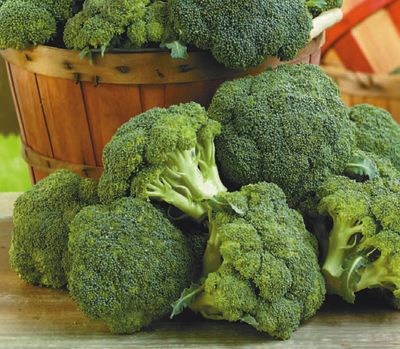
The Inner Life of Broccoli
Last summer, I read this article about a Cornell plant scientist who is trying to breed a better broccoli. Most broccoli is grown in moist, cool, foggy places, like coastal California, and doesn't tolerate warm temperatures, particularly at night. As broccoli is near the top of my favorite veggie list, I was keenly interested in his quest to breed a better broccoli, one that reaches the market sweet and crisp. Though he has successfully bred an improved broccoli, it may be a while before it reaches a market near you. Until then, is there a take-away from this work? Sure is - cook your broccoli soon after you buy it! Like that same day. No, it will not taste like fresh picked but every day it sits in your crisper is another day towards increased funkiness, something most people find off-putting about broccoli. You can steam it, chill it down quickly in ice water, drain, and refrigerate it until you need it. Heat it up in the microwave or quickly sauté it. Steaming is better at preserving nutrients than boiling, so I don't usually boil green vegetables.
Remember the stems are tasty too (in fact, they are often sweeter than the florets), but the lower stem has a thick fibrous layer that should be peeled off. Start from the bottom and pull upwards towards the florets on the thick outer layer. It will peel off in pieces. You don't need to peel all the way up; just the lower part is fibrous.
Also, learn to pick the freshest bunches: not limp and rubbery, and with tight green heads and no yellowing.
Here's a recipe, originally for asparagus, that works just as well on broccoli:
Broccoli with Goat Cheese Sauce
(serves 4, costs $2.75)
1 pound broccoli, trimmed, and cut into florets and stem pieces sliced ¼" thick
1 oz. creamy goat cheese with herbs
1 Tablespoon mayonnaise
1 teaspoon fresh lemon juice
¼ teaspoon black pepper
1 ½ Tablespoon hot water
salt
Combine goat cheese, mayonnaise, lemon juice, black pepper, and hot water in a medium bowl. Whisk until the sauce is smooth.
Steam the broccoli for about 5 minutes until just tender. Dress with sauce and sprinkle lightly with salt. Serve immediately.
Adapted from Nutrition Action.com, Asparagus with Goat Cheese and Dill Sauce
Labels:
broccoli,
easy,
goat cheese,
quick,
side,
vegetables
Monday, April 28, 2014
Simple Steamed Broccoli with Lemon
It's common to dress cooked green vegetables with lemon juice. I have a real problem with this. First, lemon juice is powerful stuff and can overpower everything and make the flavor too tart. That probably explains the generous dousing with butter or oil that follows the lemon juice. Another problem with lemon juice is its acidity. You know that dull green color that comes from overcooking green vegetables? That happens when you put an acid on green vegetables too. Ick. If you dress a big bunch of broccoli with lemon juice and don't finish it, next time you look at it, it's going to be dull green. And mushy too because the acid softens up the fiber. Double ick.
I do like the bright lemon flavor on green vegetables, however. Here's my solution: use lemon zest. You can use just lemon zest and oil. Or you can mix the lemon zest with some fresh herbs like parsley or thyme. Both of those herbs are bright, enhancing the lemon even more. If you can find lemon thyme, even more lemon! It's super easy. You can use frozen herbs instead of fresh. A light squeeze of lemon juice is nice but only for broccoli you will eat right away.
This recipe is a variation on our Simple Steamed Broccoli. At the very end, it's tossed with a bit of lemon zest. Instant lemony flavor without the overwhelming tart taste and it holds up in the fridge great.
Simple Steamed Broccoli with Lemon Zest
(serves 4-6, costs $3.13)
2 cloves of garlic, sliced thinly
1 lb. broccoli, broken into small florets and stems peeled and cut into 1/4" slices
zest of 1 lemon
1 Tablespoon fresh minced parsley or 1 teaspoon thyme leaves (optional)
2 tablespoons olive oil
¼ tsp salt, or more to taste
lemon wedges, optional
Heat 1 teaspoon olive oil in a medium saucepan or skillet with a cover over medium heat.
Add garlic and saute until fragrant but not browned. Don't burn it - it turns bitter.
Add broccoli and toss to cover with oil. Add 1 Tablespoon water, which should immediately create a lot of steam. Cover and steam broccoli for 5-6 minutes, until crisp-tender. Try a piece after 4 minutes if you like your broccoli crisp. If it's not cooked enough, cook for another minute or two.
Sprinkle with lemon zest, remaining oil, salt, and herbs, if using. Mix to combine and serve with lemon wedges, if desired. Can be refrigerated. Excellent served cold but you may need more salt. Cold temperatures dull flavors.
Saturday, March 29, 2014
Roasted Brussels Sprouts with Bacon
It's getting to the tail end of Brussels sprouts season. They are a cool weather crop so now's the time to get some before they disappear for the summer. I know, you hate Brussels sprouts. So many people have only had them boiled to death, and I have to say, they are horrendous little cabbages when overcooked. But, roasting brings out their sweetness and they maintain their crisp texture. There's just a little bit of bacon in this, enough to impart the smokey flavor but not much actual bacon. My favorite bacon is Farmland brand; it's not as salty as many of the major brands, but still very tasty.
Roasted Brussels Sprouts with Bacon
(serves 6)
1 ½ pounds Brussels sprouts, rinsed and cut in half
2 slices thick sliced bacon (or 3 slices regular thickness), diced
2 large shallots, peeled and cut into quarters
2 Tablespoons oil
salt and pepper
1 ½ Tablespoon fruity vinegar like Sherry, red wine, or balsamic
Preheat oven to 375°F. Place the Brussels sprouts on a rimmed cookie sheet large enough to hold them all in one layer. Distribute the bacon and shallots. Drizzle on oil, and sprinkle with salt and pepper. Toss it all around a bit. Roast for 10 minutes. With a wide pancake spatula, mix it all around. Roast for another 15 minutes. Remove from the oven and sprinkle with the vinegar. Serve immediately. Leftovers can be refrigerated and reheated but they will smell more cabbage-y when reheated and the texture will be softer.
Labels:
bacon,
Brussels sprouts,
easy,
roasted,
side,
vegetables
Wednesday, December 18, 2013
Cauliflower with Orange Sauce
This recipe is a riff on a richer orange sauce. That sauce contains lots of butter and it's thickened with a roux*, which explains all that butter. This is lighter, which is fine for most of us. We don't need quite that much butter - there is still some for flavor but I used a cornstarch slurry for thickening. Chinese stir fries are thickened with cornstarch, and it's a great technique for thickening sauces without a lot of fat (in fact, you could use no fat).
Though there are folks who believe that we should all eat our vegetables unadorned by fat, I find this is rather spartan. My philosophy is a little bit of tasty fat, like butter, goes a long way to making our vegetables more tasty. If that small bit of richness gets you to your vegetables, I'm all for it!
Cauliflower prices vary a bit. This week, I can get a pound for 88¢. Last week, I couldn't find it for less than $1.59/pound. The recipe cost reflects the higher price.
Cauliflower with Orange Sauce
(serves 4-6, costs $3.50)
1 head of cauliflower (about 2 pounds), cored and cut into florets
juice of 1 orange (should yield about ¼ cup juice)
1 teaspoon vegetable oil
¼ cup minced onion
2 cloves garlic, minced
¼ teaspoon ground coriander
1 teaspoon cornstarch dissolved in 1 Tablespoon cold water
½ Tablespoon butter
salt and black pepper
Bring a large pot of salted water to a boil. Cook the cauliflower for 8-10 minutes, until tender.
Meanwhile, heat the vegetable oil over medium heat. Add the onion and cook until softened. Add the garlic and coriander. Cook for another minute. Drain the cauliflower and add to the pan. Raise the heat to medium high and add the orange juice. When the juice comes to a boil, add the cornstarch+water. Boil until the sauce thickens and coats the cauliflower. Add butter, season with salt and pepper, and serve.
*Roux: flour cooked in a fat, often butter. Used as a thickener in sauces and soups like chowders and gumbos.
Wednesday, September 4, 2013
Nuts and Nut Oils: Green Beans with Almonds
Nut oils are very expensive. They are also perishable, not nearly as shelf-stable as refined oils. That's because nut oils are simply pressed, not treated with solvents and cleaned up before bottling. And, it's why they taste so good, retaining the flavors of the nut. They make a divine vinaigrette. Not everyone wants (or can afford) to spend $8 on a small bottle of oil. Know what? You can use nuts. They taste like nuts too. They are significantly cheaper than nut oil and more nutritious because they contain fiber, protein, and micronutrients. They are lower in calories than nut oils. Oils have 120 calories per Tablespoon. Nuts vary, but 2 Tablespoons of sliced almonds contain 66 calories. That's a pretty good bang for you flavor buck.
Want your salad to taste like almonds? Throw in some sliced almonds. Not only will your salad taste like almonds, it will have some great crunch too.
Green beans amandine is a classic French vegetable dish. This is a quick version of that dish. You cook some green beans, sauté the nuts in a tiny bit of oil or butter, then toss the beans with the sliced almonds. Now, isn't that simple? Impress your friends by called it green beans amandine. They don't need to know.
Here's more information on cooking fresh green beans.
Green Bean with Almonds (Amandine)
(serves 4, costs $1.50 to $2, depending on price of green beans locally)
Labels:
almonds,
easy,
green beans,
nuts,
quick,
vegetables
Thursday, June 27, 2013
Carrots and Dill
Carrots and dill have a natural affinity. They come from the same family (it's a big food family - cilantro/corinader, anise, fennel, and parsley all belong) and taste right together.
In this case, fresh or frozen dill is the best choice. Dried dill, like dried cilantro or parsley, doesn't have the vibrancy of the fresh. As I've mentioned before, you can freeze herbs to get the most from your purchase. Rarely do I use all the herbs in a bunch, but I always chop any leftovers and freeze them in a small plastic bag. They're just like fresh.
Carrots and Dill
(serves 4-6, costs $1.60)
6 medium carrots, peeled, cut into 3" lengths, then cut into ¼'s (see Note)
½ teaspoon salt + a little bit more
½ Tablespoon sugar (optional)
¼ teaspoon black pepper
1 Tablespoon butter
1 Tablespoon chopped fresh dill
Bring a medium saucepan of water to a boil. Add the salt and the carrots. Cook for 10-15 minutes, until tender (try one - that's the best way make sure they are done to your liking). Drain the carrots and return to the saucepan and place over a low flame. If the carrots are not particularly sweet, you can add the sugar. Stir to dissolve the sugar. Add the butter. When it has melted, season with a little additional salt, pepper, and fresh dill. Stir and serve.
Note: You can use "baby carrots" which are actually full-sized carrots whittled down to baby size. They are usually cut into 3-4" lengths so you just need to cut them in quarters. You need about 5-6 baby carrots to make 1 medium carrot.
Wednesday, March 13, 2013
It's cabbage time...
But, only for a very short time. Every year just before St. Patrick's Day, cabbage goes on sale for unbelievably low prices. The lowest price I've seen is 19¢, for organic cabbage no less!
Like Brussels sprouts, cabbage gets a bad rap. If you cook it to death, it can exude eau du stinky vegetable. Fortunately, there are lots and lots of ways to cook cabbage that are delicious and not stinky.
This hot salad recipe - really a stir fry - is not Irish. Unfortunately, the Irish have a habit of cooking their cabbage until dead, dead, dead. This recipe comes from Southeast Asia. It's fresh. It's light. It's very spicy (you can reduce the chile if you don't like spicy). Like Southeast Asia, about as far away from Ireland as you can get.
[Just for the record, I'll be eating corned beef and long-cooked cabbage this weekend because I like cabbage that much.]
Hot and Sour Cabbage
(serves 6, costs $1.10)
1 pound of cabbage, (about ¼ of a medium head), shredded
2 Tablespoons vegetable oil
½ - 1 teaspoon Siracha sauce or Sambal Oelek (fresh ground chile paste)
1 Tablespoon brown sugar
½ teaspoon salt
1 Tablespoon soy sauce
2 Tablespoons rice vinegar
½ teaspoon sesame oil
Heat a large skillet or wok over high heat. Add oil and swirl around pan. Add chile sauce. Careful! It will spit and spatter. Immediately, add cabbage. Stir fry for about 1 minute. Add brown sugar and salt. Stir fry for another minute. Add soy sauce, rice vinegar, and sesame oil, toss to mix, and serve.
Adapted from Healthy Salads From Southeast Asia by Vatcharin Bhumichitr
Monday, March 4, 2013
Meatless Monday: Roasted Veggie Frittata
We did a class on eggs back in the fall. You can see the other frittata recipes we did here on the blog: Broccoli Frittata and Pasta Frittata.
Frittata is the lazy gal's (or guy's) omelet. This recipe is inspired by one from Ina Garten, the Barefoot Contessa. I love many of her recipes, but she's not exactly the queen of low maintenance cooking, nor budget cooking, for that manner. I took her roasted vegetable frittata and simplified/budgetized it a bit. Still a great frittata, now accessible to everyone with a 10" oven-proof skillet.
Though we use roasted cauliflower, red peppers, and red onions, nearly any roasted veggie that you have lying about your fridge will work here. You'll need about 4 cups of roasted vegetables. You can use most any cheese you have: swiss, mozzarella, jack, cheddar, even goat cheese. It's a great way to use up leftovers. One key to getting the most out of your food budget is don't waste stuff!
Roasted Veggie Frittata
(serves 4-6, costs $6.30)
1 pound cauliflower, cut into bite-sized pieces
1 large red bell pepper, cored, seeded and cut into large dice
½ red onion, peeled and cut into large dice
4 Tablespoons olive or vegetable oil
¾ teaspoon salt or seasoned salt
½ teaspoon black pepper
8 large eggs
¼ cup milk or half & half
2 Tablespoons chopped fresh basil or 4 Tablespoons chopped fresh parsley (optional)
4 oz. shredded cheese
Preheat oven to 375°F. Mix together cauliflower, red pepper, and red onion in a large bowl. Drizzle on 2 Tablespoons oil, sprinkle with ¼ teaspoon salt, and ¼ teaspoon pepper. Toss then spread out on a large baking sheet. Roast for 25 minutes until cauliflower is tender. Remove from oven and set aside. Reduce oven temperature to 350°F.
In the large bowl you used to toss the veggies, beat together the remaining ½ teaspoon salt, ¼ teaspoon pepper, eggs, milk, and herbs, if using.
Heat a 10" oven-proof skillet over medium heat. Add remaining 2 Tablespoons oil. Add in roasted veggies. Pour the eggs over the veggies. Put the pan in the oven and bake for 20 minutes until frittata is just set in the middle. Sprinkle on cheese. Return pan to the oven and bake another 5 minutes, until cheese is melted.
Frittata can be served hot or at room temperature.
Frittata is the lazy gal's (or guy's) omelet. This recipe is inspired by one from Ina Garten, the Barefoot Contessa. I love many of her recipes, but she's not exactly the queen of low maintenance cooking, nor budget cooking, for that manner. I took her roasted vegetable frittata and simplified/budgetized it a bit. Still a great frittata, now accessible to everyone with a 10" oven-proof skillet.
Though we use roasted cauliflower, red peppers, and red onions, nearly any roasted veggie that you have lying about your fridge will work here. You'll need about 4 cups of roasted vegetables. You can use most any cheese you have: swiss, mozzarella, jack, cheddar, even goat cheese. It's a great way to use up leftovers. One key to getting the most out of your food budget is don't waste stuff!
Roasted Veggie Frittata
(serves 4-6, costs $6.30)
1 pound cauliflower, cut into bite-sized pieces
1 large red bell pepper, cored, seeded and cut into large dice
½ red onion, peeled and cut into large dice
4 Tablespoons olive or vegetable oil
¾ teaspoon salt or seasoned salt
½ teaspoon black pepper
8 large eggs
¼ cup milk or half & half
2 Tablespoons chopped fresh basil or 4 Tablespoons chopped fresh parsley (optional)
4 oz. shredded cheese
Preheat oven to 375°F. Mix together cauliflower, red pepper, and red onion in a large bowl. Drizzle on 2 Tablespoons oil, sprinkle with ¼ teaspoon salt, and ¼ teaspoon pepper. Toss then spread out on a large baking sheet. Roast for 25 minutes until cauliflower is tender. Remove from oven and set aside. Reduce oven temperature to 350°F.
In the large bowl you used to toss the veggies, beat together the remaining ½ teaspoon salt, ¼ teaspoon pepper, eggs, milk, and herbs, if using.
Heat a 10" oven-proof skillet over medium heat. Add remaining 2 Tablespoons oil. Add in roasted veggies. Pour the eggs over the veggies. Put the pan in the oven and bake for 20 minutes until frittata is just set in the middle. Sprinkle on cheese. Return pan to the oven and bake another 5 minutes, until cheese is melted.
Frittata can be served hot or at room temperature.
Labels:
budget,
cheese,
easy,
eggs,
vegetables,
vegetarian
Wednesday, February 27, 2013
Brussels Sprouts - roast 'em to love 'em
We know Brussels Sprouts have a bad reputation. Often they are boiled to death and take on an aggressive cabbage aroma and flavor. It's not the Brussels sprouts' fault. We just need a better way to cook them. Enter roasting. We blogged about vegetable roasting last year and we mentioned Brussels sprouts but you probably didn't seriously consider them. It's not on most people's list for most desirable vegetable. You should try them. They get sweeter and their flavor mellows when they are roasted. They are very nutritious like most of their cabbage-family relatives.
When you shop for Brussels sprouts, look for bright green ones. If they have yellowing leaves, they have been hanging around too long. They should be firm and try to get sprouts that are all the same size; they will roast more evenly. Use them within a few days because they will start to yellow if stored too long.
When you are ready to roast, preheat your oven to 375-400° F. Trim them up by slicing off the tough stem end. Rip off any bruised or damaged leaves. Cut the sprouts in half. Place them on a rimmed baking sheet and toss with 1 Tablespoon olive oil per pound of sprouts. Sprinkle lightly with salt and pepper. Roast them for 20-30 minutes. You want them to get well-browned in spots but be careful not to overcook them.
You can serve them as is. You can squeeze on a little bit of lemon juice. You can toss them with some sliced roasted red peppers, like in the photo. You can toss in some chopped nuts like almonds, walnuts, or pecans. The sweetness of the nuts complements the sprouts nicely.
Try a new vegetable - give roasted Brussels sprouts a chance!
Sunday, January 27, 2013
Honey Glazed Carrots
Carrots are one of the easiest vegetables to prepare. They are very tolerant of overcooking. Or undercooking - we eat lots of raw carrots in my house. You need to figure out how cooked you like your carrots - very crunchy, a little crunchy, tender, or even soft. All these points on the carrot cooking continuum are just fine.
Carrots are also cheap year round, making them an excellent go-to vegetable. They are pleasantly sweet, all by themselves, which makes them palatable to lots of folks. They aren't as challenging as, say, collard greens or even broccoli. But, still very nutritious.
This is a simplification of a classic French dish, carrots glazed with butter and sugar. Though butter is more expensive, it is mighty tasty. We use honey here, but you could substitute an equal amount of agave nectar. Even maple syrup, though that is pretty decadent. :-)
This isn't terribly sweet. There is just enough sugar to enhance the natural sweetness of the carrots. Really - this isn't dessert, it's a vegetable!
Honey Glazed Carrots
(serves 4-6, costs $1.00 made with butter, 85¢ if made with oil)
1 pound of carrots, sliced thinly or julienned or cut into sticks (see Note)
1 ½ Tablespoons butter or vegetable oil
1 ½ Tablespoons honey
about ½ teaspoon salt
chopped parsley (optional)
Fill a medium saucepan half full with water. Bring to a boil and add the carrots. Cook until they are done to your liking. For tender carrots, it takes 8-12 minutes depending on how thick they are sliced. Julienned carrots will take under 5 minutes. Drain the carrots and return to the saucepan over low heat. Add the butter, honey and salt. Toss to coat. The carrots are ready when the butter has all melted and carrots are all coated. Add chopped parsley for color, if you like.
![]() |
| Flat side down, to keep the carrot from rolling around |
Sunday, January 20, 2013
Cauliflower with Orange Flavor
This recipe is inspired by a Spanish salad recipe. It can still be served as a salad if you chill it after cooking. But, the important difference is all the ingredients are cooked. In the original recipe, the cauliflower is blanched but the rest of the ingredients are added raw. Some folks like raw onions, many don't. So, here's a variation on the raw salad that is made even better by sautéing the onions. The original version also has segments of orange; this version gets the punch of orange flavor from orange zest.
Extra-virgin olive oil is fairly expensive. To keep the cost low, we use cheaper vegetable oil for the sautéing and finish it with a drizzle of the more flavorful but more expensive extra-virgin olive oil. You can leave off the drizzle; it's still very tasty.
The average non-sale cost of cauliflower is $1.49 but this time of year, you can find it on sale a lot. Look for those produce sales! Eating what is on sale this week can really save you a bunch of money and stretch your budget for delicious and nutritious fruits and vegetables.
Cauliflower with Orange Flavor
(serves 4-6, costs $2.80)
1 small head of cauliflower (about 1 pound), cut into florets
2 Tablespoons vegetable oil
2 cloves garlic, minced
½ of a red onion, minced
1 small can (3.8 oz.) sliced olives or ⅓ cup chopped kalamata olives
2 Tablespoons water
zest of 1 orange
1 Tablespoon extra-virgin olive oil
¼ teaspoon salt
¼ teaspoon black pepper
Heat the 2 Tablespoons vegetable oil in a large skillet over medium heat. Add onion and garlic. Sauté for a minute or two until the onion becomes translucent. Add cauliflower, olives, and 2 Tablespoons water. Cook, covered, until cauliflower is tender, about 5 minutes. Remove from heat, add orange zest, extra-virgin olive oil, salt, and pepper. Stir to combine. Serve hot, warm, or chilled. If you serve it chilled, you may need to add a bit more salt.
This is a vegetable dish that improves with reheating.
Labels:
cauliflower,
easy,
olives,
quick,
salad,
side,
Spanish,
vegetables,
vegetarian
Wednesday, November 14, 2012
Moroccan Carrot Salad
For the last two classes, we made a simple green salad with a vinaigrette. This time, we switched it up a little. No greens. Carrots instead. Carrots are inexpensive, even in the winter, when lettuce often gets a lot pricier. Carrots are sturdy so this is a salad that can sit in the fridge for a few days. Don't try that with a dressed green salad!
This is a full-flavored dressing. You can leave out the red pepper flakes and it will still pack plenty of flavor. If you want it spicy, use the full ¼ teaspoon. It will be quite spicy! I like it with just a pinch of red pepper so that it doesn't overpower the other spices.
Moroccan Carrot Salad
(serves 4-6, cost is $2.00)
1 pound carrots, peeled and cut into ¼ slices
1 teaspoon salt
1 teaspoon ground cumin
1 teaspoon sweet paprika
¼ teaspoon black pepper
a pinch to ¼ teaspoon crushed red pepper flakes (optional)
2 Tablespoons olive oil
1 clove garlic, minced
juice of 1 lemon
1-2 Tablespoons chopped parsley
Bring about 3 cups of water to a boil in a medium saucepan. Add the salt and carrots. Cook over medium heat until just tender, about 5 minutes. Do not overcook or they will fall apart when tossed with the dressing. Drain and cool.
Mix the remaining ingredients in a medium bowl. Add cooled carrots and toss.
This salad improves as the carrots sit in the dressing.
For a super quick variation, use a 1 pound bag of shredded carrots. Don't cook them. Just dress them raw. Different texture but the same bold flavor.
This is a full-flavored dressing. You can leave out the red pepper flakes and it will still pack plenty of flavor. If you want it spicy, use the full ¼ teaspoon. It will be quite spicy! I like it with just a pinch of red pepper so that it doesn't overpower the other spices.
Moroccan Carrot Salad
(serves 4-6, cost is $2.00)
1 pound carrots, peeled and cut into ¼ slices
1 teaspoon salt
1 teaspoon ground cumin
1 teaspoon sweet paprika
¼ teaspoon black pepper
a pinch to ¼ teaspoon crushed red pepper flakes (optional)
2 Tablespoons olive oil
1 clove garlic, minced
juice of 1 lemon
1-2 Tablespoons chopped parsley
Bring about 3 cups of water to a boil in a medium saucepan. Add the salt and carrots. Cook over medium heat until just tender, about 5 minutes. Do not overcook or they will fall apart when tossed with the dressing. Drain and cool.
Mix the remaining ingredients in a medium bowl. Add cooled carrots and toss.
This salad improves as the carrots sit in the dressing.
For a super quick variation, use a 1 pound bag of shredded carrots. Don't cook them. Just dress them raw. Different texture but the same bold flavor.
Tuesday, September 25, 2012
Simple Stewed Zucchini
Here's another simple and quick vegetable recipe: stewed zucchini. Zucchini is quite versatile. It is quite good quickly sauteed but it's also delicious stewed. That is, cooked in a flavorful liquid. It still cooks fairly quickly. Zucchini is a bit of a chameleon when it comes to flavor. It doesn't have a strong flavor and picks up other flavors, like onions or garlic, readily. One of the nice things about stewed zucchini is that it's just as good reheated, unlike barely sauteed zucchini. You can't really overcook it because it's already cooked until soft.
If you are a novice cook, you may have seen the term "simmer" before but you may wonder exactly what that is. Simmer is used to describe heating liquids to not quite boiling. The surface of the liquid quietly moves with some small bubbles now and then - no big bubbles and splashing. Simmering is a gentle cooking method used for long cooking, like for spaghetti sauce, or cooking delicate things like fish, or in this recipe, zucchini.
Stewed Zucchini
(serves 4-6, costs $2.50)
2 Tablespoons olive oil
1 medium onion, chopped
1 clove of garlic, minced
4 to 5 medium zucchini, about 1 ½ pounds, sliced about ¼" thick (see Note)
⅔ cup chicken or vegetable stock
¼ teaspoon dried oregano, crushed in your palm
¼ - ½ teaspoon salt (depends on the saltiness of your stock)
¼ teaspoon black pepper
4 sprigs fresh parsley, chopped (optional)
Heat oil in a skillet over medium heat. Add onion and saute until edges of onions start to brown. Add garlic and cook for another minute. Add zucchini to onions. Cook for another 5 minutes, stirring once or twice so they cook evenly. They may start to brown (it depends a lot on how much moisture there is in the zucchini), which is OK. Add the stock, crushed oregano, salt and pepper. Simmer gently for about 10 minutes, uncovered, until most of the stock has evaporated. Sprinkle with parsley, if using, and serve.
Note: Any summer squash, such as yellow squash, can be used. Or mix yellow and green. You will find it easier to slice the zucchini if you cut it in ½ lengthwise, put the flat side down, then slice it.
Wednesday, January 18, 2012
Roasted Cauliflower with Lemon and Mustard
We gave you the basics on roasting vegetables last week. Here's a delicious version of roasted cauliflower that is fancied up a bit. Rather than oil, it uses butter as the fat, which adds tons of flavor. Mustard and lemon add even more. The roasting temperature is lower because the butter will burn at high temperatures. Totally delicious.
Roasted Cauliflower with Mustard and Lemon
(serves 6; total cost is $4.20)
2 lbs cauliflower (1 medium head)
6 tbl butter
2 tbl fresh lemon juice
2 tbl whole grain mustard, such as Dijon
1 ½ tsp fresh lemon zest, minced (see Note)
½ tsp salt
¼ tsp black pepper
2 tbl chopped parsley
Preheat oven to 375° F.
Remove leaves and the tough core from the cauliflower. Slice into ¼" pieces. Place in a large bowl.
Melt butter over low heat. Add lemon juice, mustard, and lemon zest. Whisk to combine. Pour over cauliflower and toss. Pour onto a large rimmed cookie sheet, spreading the cauliflower into 1 layer. Make sure to scrape all the butter out of the bowl. That's the good stuff; don't waste it! Sprinkle cauliflower with salt and pepper.
Put in the oven for 15 minutes. Stir around, then return to the oven for another 20 minutes until cauliflower is tender.
Sprinkle with chopped parsley. Serve hot or at room temperature.
Note: The easiest way to zest a lemon is with a microplane. If you don't have one, you can use a vegetable peeler to take off just the yellow part of the peel. The white part (the pith) is extremely bitter, so don't peel too deep. The top yellow layer is full of tasty lemon oil and that's what you want.
Roasted Cauliflower with Mustard and Lemon
(serves 6; total cost is $4.20)
2 lbs cauliflower (1 medium head)
6 tbl butter
2 tbl fresh lemon juice
2 tbl whole grain mustard, such as Dijon
1 ½ tsp fresh lemon zest, minced (see Note)
½ tsp salt
¼ tsp black pepper
2 tbl chopped parsley
Preheat oven to 375° F.
Remove leaves and the tough core from the cauliflower. Slice into ¼" pieces. Place in a large bowl.
Melt butter over low heat. Add lemon juice, mustard, and lemon zest. Whisk to combine. Pour over cauliflower and toss. Pour onto a large rimmed cookie sheet, spreading the cauliflower into 1 layer. Make sure to scrape all the butter out of the bowl. That's the good stuff; don't waste it! Sprinkle cauliflower with salt and pepper.
Put in the oven for 15 minutes. Stir around, then return to the oven for another 20 minutes until cauliflower is tender.
Sprinkle with chopped parsley. Serve hot or at room temperature.
Note: The easiest way to zest a lemon is with a microplane. If you don't have one, you can use a vegetable peeler to take off just the yellow part of the peel. The white part (the pith) is extremely bitter, so don't peel too deep. The top yellow layer is full of tasty lemon oil and that's what you want.
Labels:
cauliflower,
lemon,
mustard,
side,
vegetables,
vegetarian
Subscribe to:
Posts (Atom)