A blog dedicated to teaching you about food and cooking. Learn to cook. Have fun and Eat well too!
Showing posts with label Greek. Show all posts
Friday, December 26, 2014
Greek Vegetables
This is a great recipe when you have bits of Mediterranean vegetables languishing in your fridge. I threw this together for Christmas Eve dinner with some fresh veggies and some garden veggies that I had stashed in the freezer. Consider this a template for getting more vegetables onto your plate. If you don't like eggplant, add more of the other things you do like.
The use of olive oil is generous, as is typical in Greece, though I've cut back from traditional Greek recipes that would call for even more. Olive oil makes vegetables delicious. Vegetables on their own are very low in calories but high in many other things that are good for you. If some olive oil gets you to eat more vegetables, I'm all for it.
Greek Vegetables
(serves 8)
4-6 Tablespoons olive oil, divided
1 cup chopped onion or leeks
4 cloves garlic, minced
2 bell peppers, whatever color you have, large dice
2 cups peeled eggplant, large dice
2-3 cups zucchini, large dice
1-2 cups frozen artichoke hearts
1 14 oz. can diced tomatoes, undrained
1 teaspoon oregano or summer savory
about 1 teaspoon salt
½ teaspoon black pepper
Heat up a dutch oven or large deep skillet over medium heat and add 2 Tablespoons olive oil. Add the onion/leek, garlic, and bell peppers, and sprinkle with ½ teaspoon salt. Cook for 10 minutes until onions are quite soft but not browned. Add the eggplant and cover. Cook for 10 minutes. Add the remaining ingredients along with another 2 Tablespoons of olive oil. Bring to a simmer. Then reduce the heat to low, cover, and cook gently for 30 minutes until all the vegetables melt together in olive oil goodness. Check for salt. Before serving, drizzle on remaining 2 Tablespoons of olive oil, if desired.
Recipe adapted from Ikaria by Diane Kochilas, Rodale, 2014.
Photo: By Dana Payne (Own work) [CC BY-SA 3.0 (http://creativecommons.org/licenses/by-sa/3.0)], via Wikimedia Commons
Wednesday, October 1, 2014
Greek Salad
![]() |
| One of the few salads that did have some lettuce - but not much! |
Greek Salad
(serves 4)
1 cucumber, peeled and cut into thick slices
1 large red pepper, cored, seeded and cut into 1" chunks
1 large green pepper, cored, seeded and cut into 1" chunks
2 ripe tomatoes, cored and cut into chunks
½ medium red onion, sliced thinly
4 oz. feta cheese, preferably sheep milk
tasty black olives such as Kalamata
salt
dried oregano crushed between your fingers
Dressing
1 - 2 cloves garlic, smashed
a healthy pinch of salt
1 Tablespoon fresh lemon juice
3 Tablespoons extra virgin olive oil, the best you can afford
Toss together the cucumber, peppers, tomatoes, and red onion in a large bowl. Mash the garlic cloves with the salt until you have a paste of garlic. Press your knife blade while pulling it across the garlic-salt to make the paste. At first, it will be chunky but the abrasive nature of the salt will help to break down the garlic. Place the garlic paste in a medium bowl. Add in the lemon juice and olive oil. Whisk to combine. Drizzle over the vegetables and toss again. Taste for salt, adding more if needed. The feta and olives are quite salty, so don't over-season the veggies.
To serve, arrange ¼ of the vegetables on a plate. Garnish with slices or chunks of feta cheese and olives. Sprinkle lightly with a pinch of dried oregano.
Vegetarian Pastitsio
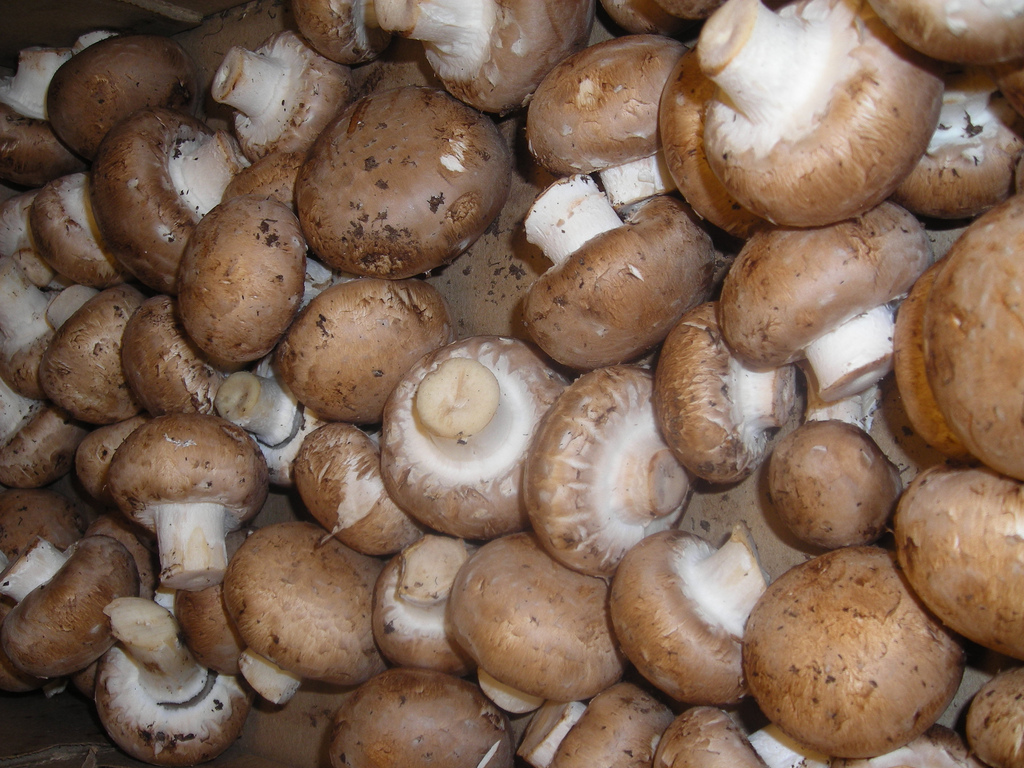
Here's a great tip for the vegetarians out there for adapting the traditional Pastitsio recipe I posted earlier this week. Instead of using 1 pound of ground meat, substitute 1 ½ pounds chopped mushrooms. Mushrooms have a savory flavor and substantial texture, making them a great meat substitute. You won't need to pour off any fat because mushrooms have next to none. In fact, I would increase the olive oil to 4 Tablespoons to make them a bit richer. The rest of the recipe stays the same.
Photo credit: By wikioticsIan (Mushrooms (cremini)) [CC-BY-SA-2.0 (http://creativecommons.org/licenses/by-sa/2.0)], via Wikimedia Commons
Monday, September 29, 2014
Spinach and Rice Casserole
Another recipe for my Greek class. It draws from the very popular Spanakopita which is a Greek spinach pie. Spanakopita is made with phyllo dough but that's not the easiest thing to deal with for beginning cooks. Here, we make it easier by mixing the spinach filling with some brown rice. This is a stick-to-your-ribs vegetarian entree.
Frozen spinach comes in packages ranging from 10 oz to 16 oz. Use whatever you can find. You do need to thaw it and drain it, but no need to squeeze out the water, as is usually done with spinach filling recipes.
Spinach and Rice Casserole
(serves 6-8)
about 5 cups cooked brown rice*
2 Tablespoons olive oil
1 medium onion, chopped
2 cloves garlic, minced
2 packages frozen chopped spinach, thawed and drained
4 eggs
1 cup low fat or whole milk
1 cup shredded Monterey Jack cheese, about 4 oz.
1 cup crumbled feta cheese, about 4 oz.
2 Tablespoons chopped parsley
2 Tablespoons chopped dill
1 teaspoon salt or more to taste
½ teaspoon black pepper
non-stick cooking spray
Preheat oven to 350°F. Heat the olive oil in a large skillet over medium heat. Add the onion and sauté until soft, about 5 minutes. Add the garlic and spinach. Cook for a few minutes until heated through. Remove from the heat, transfer to a large bowl, and allow to cool for a few minutes, so you don't scramble the eggs when you mix them into the spinach. Spray a 9" x 13" baking dish with non-stick cooking spray. Beat the milk into the eggs. Add this and the remaining ingredients into the spinach and stir to combine. Spread into the baking dish. Cover with foil and bake for 35 minutes. Uncover and bake for another 10 minutes. Serve hot or at room temperature; refrigerate any leftovers.
*Cook 1 ¾ cups raw brown rice in 3 ¼ cups water to yield 5 cups of rice. Depending on the rice, they take 40-50 minutes to cook. If you cooked the rice ahead and it is cold, zap it for a minute to warm it up. Precooked brown rice cooks up in less time than white rice and is a good option if you want this dish in under an hour. Check the box for how much rice you need to cook because the yield is different than for raw brown rice.
Thursday, September 25, 2014
Pastitsio - Greek Baked Pasta
This is a Greek version of lasagna. It is similar to many Italian versions except:
- It is not made with flat noodles. It's always made with elbow macaroni.
- The red meat sauce, usually lamb but could be beef, is flavored with cinnamon.
- It isn't heavy on cheese. The richness comes from a cheaters* béchamel, a white sauce made with milk and enriched with eggs.
It is familiar, and yet not. The cinnamon is the secret flavor which makes it totally unlike any Italian lasagna.
This recipe makes a lot. It's rather a production, so that's a good thing. You can freeze it or you can share it with your friends. You can eat it for breakfast, if you like. I have!
Because there are a number of components and steps, it's important to read through the whole recipe to understand what happens when. You want to wait until you are ready to assemble the casserole to cook the pasta. Otherwise, it will be over-cooked and mushy.
Pastitisio
(serves 8-10)
Meat Sauce
½ Tablespoon olive oil
1 pound ground beef or ground lamb, or a combination of the two
1 large onion, chopped
½ cup dry red wine
½ cup tomato sauce
3 Tablespoons tomato paste
2 cloves garlic, minced
½ teaspoon cinnamon
1 teaspoon dried oregano
¾ teaspoon salt
½ teaspoon black pepper
1 14 oz. can diced tomatoes, drained
1 pound elbow macaroni
salt for pasta cooking water
White Sauce
2 Tablespoons butter
3 Tablespoons cornstarch
½ cup cold water
3 cups whole milk
¾ teaspoon salt
4 eggs, beaten in a medium bowl
2 cups grated Parmesan cheese
ground cinnamon for garnish
non-stick cooking spray
Spray a 9"x13" lasagne pan with cooking spray. Set aside.
Heat the olive oil in a large skillet over medium-high heat. Add the ground meat and cook until starting to brown. Drain off the fat to leave about 1 Tablespoon. Add the onion and cook for 5 minutes, under softened. Add the remaining meat sauce ingredients, bring to a boil, reduce to a simmer, and cook until the remaining components are complete. Make sure to taste it for salt. If the sauce is bland, the casserole will be bland, so season well.
While the sauce is simmering, bring a pot of salted water to boil.
Melt the butter in a medium saucepan. Dissolve the cornstarch in water. Add the milk, cornstarch, water, and salt to the saucepan. Cook until the sauce starts to thicken, stirring to prevent sticking and scorching. The sauce will not thicken until the milk comes to a boil. Remove the sauce from the heat and pour about 1 cup of it into the beaten eggs, stirring to combine. Then add the rest of the sauce to the eggs, mixing well. Set aside.
Preheat the oven to 350°F. Cook the macaroni until just under-done, about 7-8 minutes. Drain well. Place ½ the macaroni in the lasagne pan. Pour the meat sauce evenly over the macaroni. Sprinkle with 1 cup of the grated cheese. Spread on the rest of the macaroni. Pour the white sauce over the pasta, spreading it evenly. Sprinkle with the rest of the cheese and ground cinnamon. Bake for 45 minutes. Let sit for 5 minutes before trying to cut.
Tastes even better reheated the next day.
*It's a cheaters version because a classic béchamel is thickened with a roux, a mix of butter and flour. This one uses cornstarch, which also helps to stabilize the proteins in the eggs, keeping them from scrambling in the hot sauce.
Monday, September 22, 2014
School of Eating Good, Inc. officially a not-for-profit charity
![]() |
In fact, great news came our way from the Internal Revenue Service - how often does that happen?! School of Eating Good, Inc. was granted tax exempt status under section 501(c)(3). Which means that we do not have to pay income tax and you can make donations to support our mission and your donations are tax-deductible (if you pay US income taxes). This is a big step because it makes our mission as an educational organization more legit. We can start planning some interesting new initiatives, raising money for these, and bringing food education to even more people.
To get you primed for the Greek recipes coming later this week, here's a recipe that jazzes up plain white rice in a Greek way: with the addition of dill and lemon. I am not a fan of dried dill. Like its cousin cilantro, it loses most of its flavor when it is dried. I recommend you buy a big bunch (it's in season right now), chop it, and freeze it. You'll have fresh dill all winter long.
Lemon-Dill Rice
(serves 4-6)
2 Tablespoons olive oil
½ medium onion, chopped
1 cup white rice
zest of ½ a lemon
juice of ½ a lemon, about 1 ½ Tablespoons
2 Tablespoons chopped fresh dill
½ teaspoon salt
¼ teaspoon black pepper
1 ¾ cups water
Heat the oil in a medium saucepan over medium heat. Add the onion and sauté until translucent, a couple of minutes. Add the rice and sauté for another minute. Add the remaining ingredients, stir, and bring to a boil. Reduce heat to low to maintain a simmer and cover. Cook for 18-20 minutes. Turn off heat and let sit for 5 minutes before serving.
Recipe adapted from Lemon-Dill Rice, #250959 at food.com
Illustration: "Illustration Anethum graveolens0". Licensed under Public domain via Wikimedia Commons
To get you primed for the Greek recipes coming later this week, here's a recipe that jazzes up plain white rice in a Greek way: with the addition of dill and lemon. I am not a fan of dried dill. Like its cousin cilantro, it loses most of its flavor when it is dried. I recommend you buy a big bunch (it's in season right now), chop it, and freeze it. You'll have fresh dill all winter long.
Lemon-Dill Rice
(serves 4-6)
2 Tablespoons olive oil
½ medium onion, chopped
1 cup white rice
zest of ½ a lemon
juice of ½ a lemon, about 1 ½ Tablespoons
2 Tablespoons chopped fresh dill
½ teaspoon salt
¼ teaspoon black pepper
1 ¾ cups water
Heat the oil in a medium saucepan over medium heat. Add the onion and sauté until translucent, a couple of minutes. Add the rice and sauté for another minute. Add the remaining ingredients, stir, and bring to a boil. Reduce heat to low to maintain a simmer and cover. Cook for 18-20 minutes. Turn off heat and let sit for 5 minutes before serving.
Recipe adapted from Lemon-Dill Rice, #250959 at food.com
Illustration: "Illustration Anethum graveolens0". Licensed under Public domain via Wikimedia Commons
Sunday, February 24, 2013
Chicken Gyro-Style
Lemon is a lovely flavor enhancer for chicken. Many marinades use lemon juice but here we use lemon zest. It has a purer lemon flavor. Lemon juice is very acidic and that tends to overpower the lemony flavor. Lemon zest gets all its flavor from the lemon oil in the skin. Just make sure to only grate off the bright yellow skin. The white underneath the skin, the pith, is exceedingly bitter and not the flavor you want to add to your chicken.
Here's a selection of tools you can use for zesting. My favorite is Microplane® but you can use the smallest holes on a box grater. You can get a box grater for a lot less money than a Microplane and it has multiple purposes (like shredding cheese). If you do spring for a Microplane, get one with a handle. They are easier to use than the handle-less variety. The citrus zester is a bit of an antique these days. Before there was a Microplane - it appeared in culinary stores in the mid 90's - the citrus zester was the tool for zesting. But, it can't compete with a Microplane which is why mine hides way in the back of the drawer these days.
![]() |
| Back to front: box grater, 2 different types of Mircoplane and a citrus zester |
Chicken Gyro-Style
(serves 3-4, costs $4.65)
2 cloves garlic, minced or pressed
2 Tablespoons extra-virgin olive oil
the zest of 1 fresh lemon
½ teaspoon dried basil
½ teaspoon dried oregano
1 teaspoon dried rosemary
a couple of sprigs of fresh parsley, chopped
1 pound boneless skinless chicken, thighs or breasts
salt and black pepper
Mix together garlic, olive oil, and lemon zest in a non-reactive pan that will hold all the chicken in one layer. Crumble up the dried herbs in your palm and add to the garlic mixture. Add the parsley and mix to combine. Put the chicken in the dish and rub the herb mixture all over the chicken. Cover and refrigerate for at least 30 minutes or up to 2 hours.
Season chicken with salt and black pepper. Broil or grill until cooked all the way through, how long will depend on thickness of chicken. Thin pieces will take only 15 minutes and whole breasts can take 30 minutes.
Serve on a big salad or stuffed into a pita with lots of lettuce and tomatoes.
(Adapted from a recipe for lamb gyros from the American Lamb Association)
Subscribe to:
Posts (Atom)